
The Pentagon and NASA’s SpaceX Marriage Creates a Monopoly for Elon Musk’s Space Giant
How a Catastrophic Blue Origin Failure and SpaceX's Unmatched Launch Cadence Have Made It Indispensable to NASA and the Pentagon
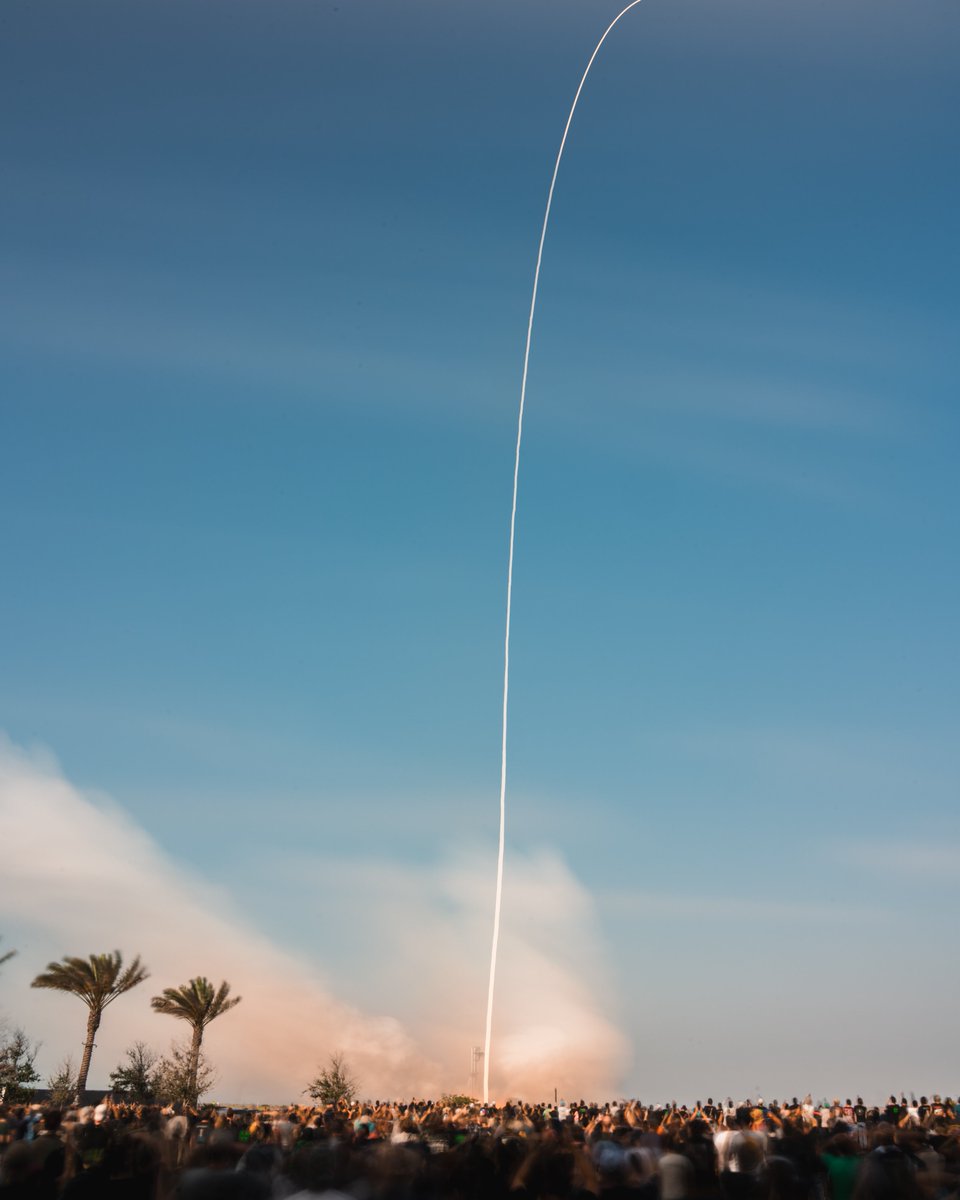
SpaceX Starship V3 during its successful May 22, 2026 test flight. The heavy-lift vehicle will now become central to NASA’s Artemis program.
With its latest winning multi-billion-dollar contract awards, combined with the recent catastrophic Blue Origin explosion, SpaceX has made itself the indispensable, single point of failure for U.S. national security and the American space program.
In the days since the company released its S-1 filing, it has executed a series of well-timed announcements showcasing its massive value to investors, and its absolute criticality to the Pentagon, as its public listing date nears.
Welcome to Orbital Intel, presented by Defense Briefing. Every Wednesday, you will receive the week's defense, aerospace and space economy signal in plain language. Primary sources. No hype. Built for analysts, operators and the curious.
Today's headlines are rarely new. They're sequels. We deliver the prequels.
First, SpaceX secured a $2.29 billion fixed-price contract to build the Space Data Network (SDN) Backbone: a secure, high-speed satellite communications layer essential to the military's "Golden Dome" missile-defense objective.1
Just three days later, on May 29, the company secured a $4.16 billion Space Force contract to build the Space-Based Airborne Moving-target Indicator (SB-AMTI). This network forms another crucial layer of the Golden Dome plan, designed to detect, track and maintain custody of airborne threats like fighter jets, cruise missiles, drones and hypersonic weapons from low Earth orbit (LEO). Combined, the contracts are valued at approximately $6.45 billion.2
Simultaneously, SpaceX proved it is no longer just a rocket company, morphing instead into an orbital infrastructure titan. Its S-1 disclosed a massive May 2026 deal with Anthropic, where the Claude-creators will pay SpaceX $1.25 billion monthly through May 2029 ($45 billion total if executed to completion) in exchange for access to the raw processing power of xAI's Colossus I and II data centers (xAI was acquired by SpaceX in February 2026). Per the S-1/A (issued partially to clarify details of the Anthropic deal), capacity ramps in May and June 2026 at a prorated fee, and once the initial three-month period has passed, the agreements may be terminated by either party upon 90 days’ notice.3
 SpaceX)"
class="w-full rounded-xl shadow-lg">
SpaceX)"
class="w-full rounded-xl shadow-lg">
The company’s connectivity segment, primarily driven by Starlink, but also encompassing the Starshield military communications network, generated $11.4 billion in 2025, representing just over 60% (approximately 61%) of SpaceX’s total revenue of $18.674 billion. Starshield is SpaceX’s staunch defense and intelligence business unit. It operates a specialized satellite network built on Starlink technology and it is tailored for secure military and government use. Starshield is another crucial pillar to the US national security dependence on SpaceX.3
Track the contracts, launch cadence and industrial shifts shaping national security.
Get Orbital Intel FreeCombined with the largely successful May 22 flight of the next-generation Starship V3, SpaceX has demonstrated a dual-threat capability: commanding hefty fees for tech infrastructure while continuing to advance the heavy-lift vehicle NASA is counting on for a return to the moon.4
But SpaceX’s monopoly was strengthened even further on May 28.
[ SENSOR SCAN :: 43Y OFFSET :: CLASSIFIED :: @DEFENSEBRIEFING ]
Blue Origin, SpaceX’s closest competitor in the heavy-lift space segment (despite trailing by a decade in operational launches and being equipped with massive funding), suffered a catastrophic failure when its New Glenn rocket exploded due to an anomaly occurring during a static fire engine test. The blast was strong enough to generate seismic waves which were detected as far as 135 miles from the launch site, an event catalogued by the USGS National Earthquake Information Center.5

Blue Origin New Glenn explodes during static fire test on May 28, 2026 at LC-36. Click image to watch full footage. Footage courtesy: Spaceflight Now / Blue Origin
The blast damaged Launch Complex 36 (LC-36A), the company’s only operational launchpad. After reviewing the launchpad’s condition during a preliminary survey post-blast, Blue Origin’s CEO Dave Limp said the damage could have been considerably worse.
Limp said the large support tower was damaged, but is repairable in place, rather than needing to be torn down and rebuilt. Meanwhile the propellant farm, oxygen, liquid hydrogen and liquefied natural gas (LNG) tanks all survived.
“This is good luck because these are very long lead items,” Limp said on X.
The Blue Origin booster “Never Tell Me The Odds,” along with three upper stages stored inside the integration facility also survived the blast undamaged, helping to limit the production setback.
However, the transporter-erector was damaged beyond repair. This is a key loss. The structure is required to physically move the New Glenn rocket horizontally from its hangar to the launchpad, and then to rotate it vertically in preparation for the launch itself. This device took years for Blue Origin to construct.
Limp moved to minimize the setback, downplaying the demise of the transporter-erector and stating that they will not build a replacement unit but instead will pivot to an alternative vertical conop (concept of operations).
“We had already been working for some time on eliminating our transporter-erector in favor of an alternative vertical conop,” Limp said. “And we’ll now go directly to that; so we don’t need a new transporter-erector.”
That bravado needs to be examined with a skeptical eye though. A company does not invest years developing a major piece of ground hardware, only to happily abandon it due to an unexpected accident. Pivoting to an unproven assembly method under tight deadline pressure is a significant risk, not a convenience. Limp has set an ambitious target of returning New Glenn to flight before the end of 2026.
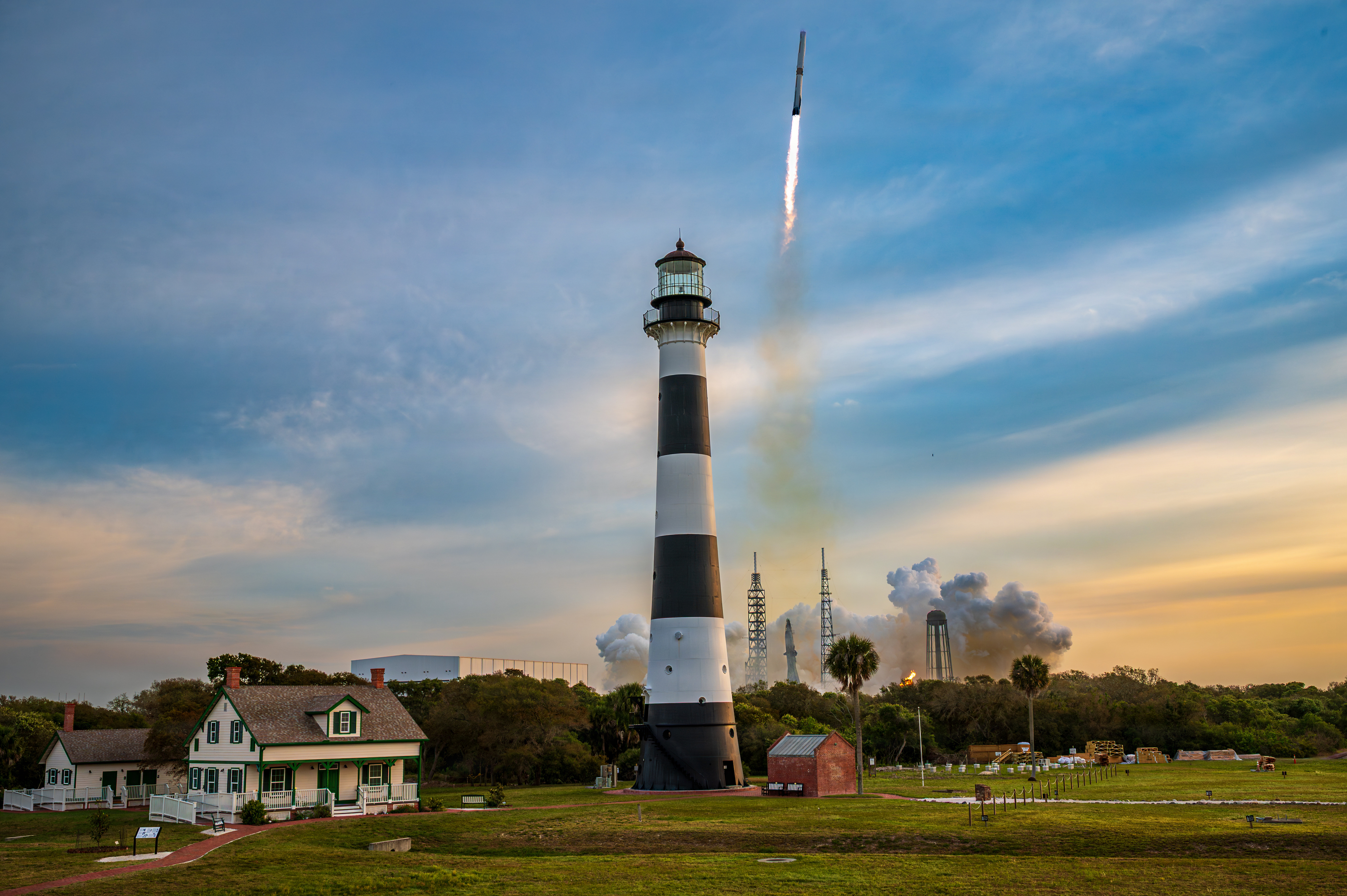 Gwendolyn Kurzen)"
class="w-full rounded-xl shadow-lg">
Gwendolyn Kurzen)"
class="w-full rounded-xl shadow-lg">
The end-of-2026 timeline is aggressive. Historically, companies have taken at least a year to rebuild launchpads damaged during rocket explosions. SpaceX was one of those companies, spending 15 months repairing a Florida launchpad after a Falcon 9 explosion in 2016; however, SpaceX had other launch sites at its disposal. Blue Origin does not have that luxury. Additionally, they will also need to investigate what caused the blast in the first place, adding an additional layer of complexity to the tall task.
The company also suffered a mishap during the NG-3 mission in April, when a failure of the rocket’s second stage stranded AST SpaceMobile’s BlueBird 7 satellite payload in an unstable orbit. They were only cleared to proceed with the latest flight a week before the blast occurred.
Get the primary-source signal behind the week’s defense and space headlines.
Get Orbital Intel FreeJust days prior to the explosion, NASA had awarded Blue Origin an initial $188 million contract to deliver two rovers to the lunar surface using its Blue Moon Mark 1 lander. Additionally, just hours before the explosion, Blue Origin was awarded by U.S. Space Force a task order to launch a mission for the National Reconnaissance Office with a National Security Space Launch (NSSL) Phase 3 Lane 1 task order.6
Both Space Force and NRO stated they remain committed partners with Blue Origin despite the recent setbacks.
[ SENSOR SCAN :: 43Y OFFSET :: CLASSIFIED :: @DEFENSEBRIEFING ]
With New Glenn grounded indefinitely and a secondary launchpad still only in early development, Blue Origin's ambitious timeline to transport NASA payloads (and eventually astronauts to the moon) is under severe pressure, as is its chase to catch up with SpaceX.
The New Glenn rocket explosion has narrowed NASA’s options down to one company: SpaceX. While Lockheed Martin’s Orion capsule and Boeing’s Space Launch System can get astronauts to travel around the moon (like the recent Artemis II mission), landing on the surface is more complicated, requiring a separate vehicle. For the upcoming Artemis III mission (tentatively scheduled no earlier than late 2027), SpaceX’s Starship-derived lander is now the only realistic near-term option left available to NASA.
Alternative domestic providers like Rocket Lab, Firefly and Relativity are still in their proving-ground phases for medium and heavy-lift rockets. International options like Arianespace or Mitsubishi do not fly on a reliable cadence, and geopolitical restrictions make a foreign savior unlikely anyhow. The United States space architecture is now heavily, inextricably tied to Elon Musk’s aerospace giant.
The Architecture of Indispensability
The Pentagon's willingness to lean so heavily into SpaceX underscores a strategic shift: the U.S. military is actively buying the speed, scale and commercial capacity of a single company operating at a cadence its rivals cannot touch. The $2.29 billion SDN contract is the digital glue for this strategy, overseeing three critical technical functions: backhaul communications, fronthaul communications and network orchestration.
Front-line sensors deliver value only when their data reaches commanders in real time. Backhaul communication links ensure vital target information never gets stranded. Fronthaul links connect deployed assets (whether a naval ship or an Army radio terminal) directly to the satellite constellation.
Network orchestration acts like the wise grandmaster on a chessboard, automatically rerouting data paths in real time across constellations and orbital layers if an adversary attempts to jam the transmission or if bandwidth tightens.
It is a brilliantly resilient system. But its geopolitical reality is tough.
Follow the architecture, contractors and budget decisions behind Golden Dome.
Get Orbital Intel FreeBy cementing itself as the sole provider of both the physical transport layer (Starship) and the digital defense layer (SDN and SB-AMTI), SpaceX has achieved total vertical integration over American space ambitions. The Blue Origin disaster highlights that the U.S. government no longer has a safety net.
Before 2028, both companies were supposed to complete uncrewed flight trials to earn NASA human-spaceflight certification. Now, Blue Origin is picking through the rubble of LC-36A while Space Systems Command expects its first military tracking constellations to be operational by that exact same 2028 deadline.
The Angle
The Pentagon and NASA did not necessarily set out to create a monopoly, but through a mix of SpaceX’s unparalleled operational execution and the compounding failures of its competitors, a monopoly is what they are getting. As SpaceX nears its public listing date, it does so not just as a commercial market darling, but as an official, irreplaceable arm of U.S. national security.
Forward this to the person tracking how commercial launch concentration is reshaping U.S. national security.
Sources: U.S. Space Force contract announcements and budget materials, SpaceX securities filings and flight updates, Blue Origin and NASA announcements, National Reconnaissance Office task-order materials, U.S. Geological Survey event data and company executive statements. No classified information was used and all material is publicly accessible.